We just returned from a four day, three night, 42 mile hike through Torres del Paine National Park in southern Chile. The hike was one of the most amazing hikes I have ever been on as well as one of the challenging. We met a group of people on the bus from Argentina to Chile who were also planning on hiking the same trail as us, so we decided to go as a group. As a group, we were one guy from Chicago, one guy from Connecticut, one guy from Canada, one guy from Australia, two girls from Alaska and Su and I. The trail we chose is called the W, as it is literally in the shape of a W, meandering up into three separate valleys.
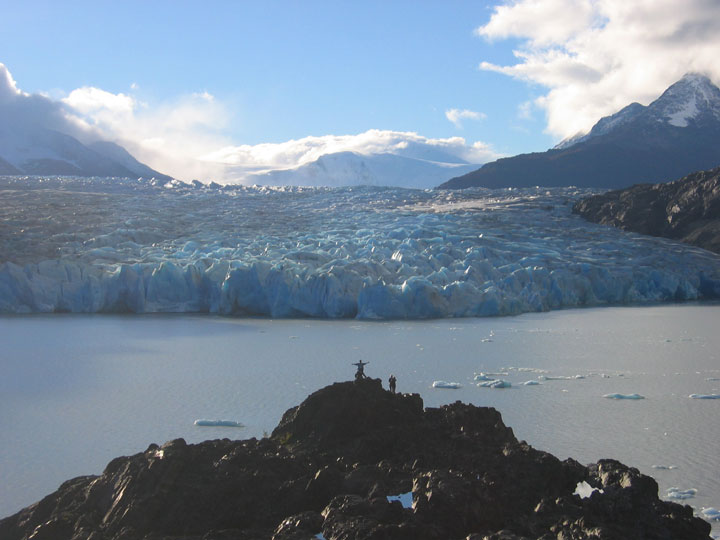
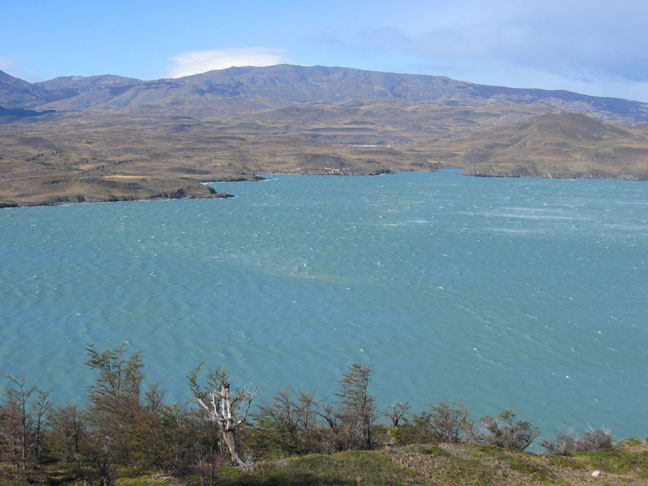
The first day involved taking a three hour bus ride from out hotel to a lake in the park. Here we had a one hour Catamaran trip up a turquoise colored lake past the mountain range and valleys we would be spending the next four days trekking through. Once the boat arrived, we quickly setup our tents and setout to conquer the first portion of our hike, which was a six mile hike up to a glacier. We started the hike at 1:30 pm, so we wanted to finish this 12 mile leg of the hike with speed. We were walking fast because our tents and sleeping bag we left at the base of the trail. W walked along the lake below the glacier and could see deep blue icebergs floating throughout. It took us about three hours to scramble up to the glacier. The glacier was huge, and the colors of it were a deep blue, similar to the color of an ice pack that you would use for a soar muscle. After snapping photos and eating a lunch, we began our hike down to our tents. The hike back was tough, as I am not used to walking twelve fast miles in one day. We made it back to camp around 8:00, ate dinner and went to bed.
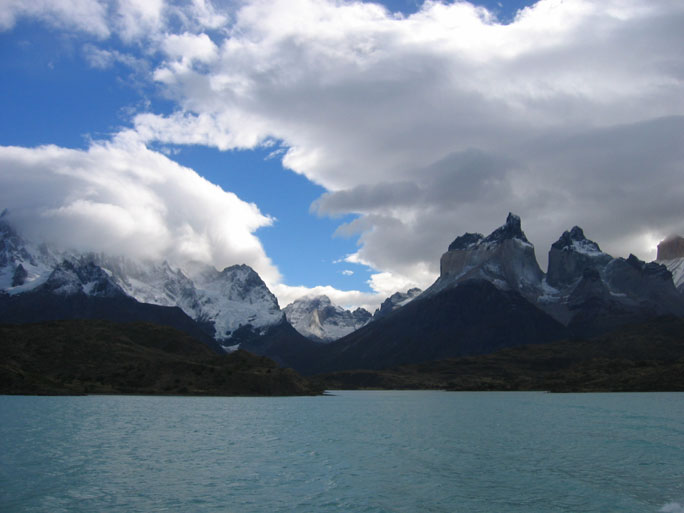
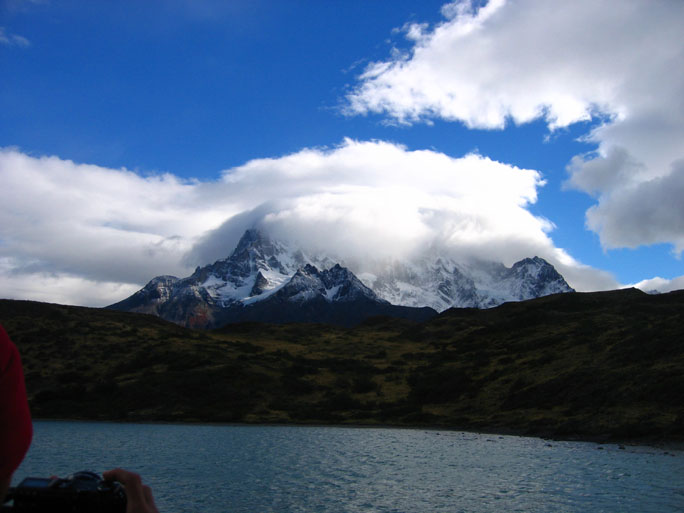
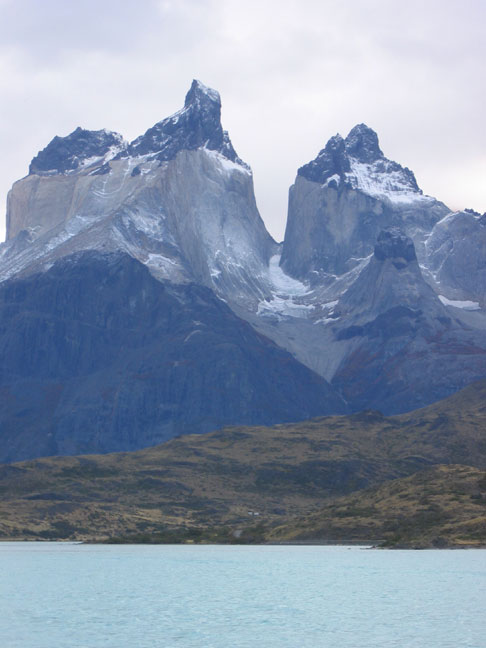
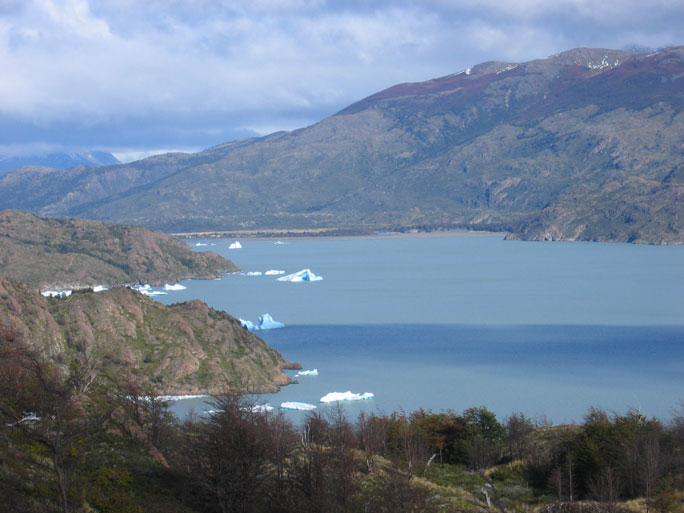
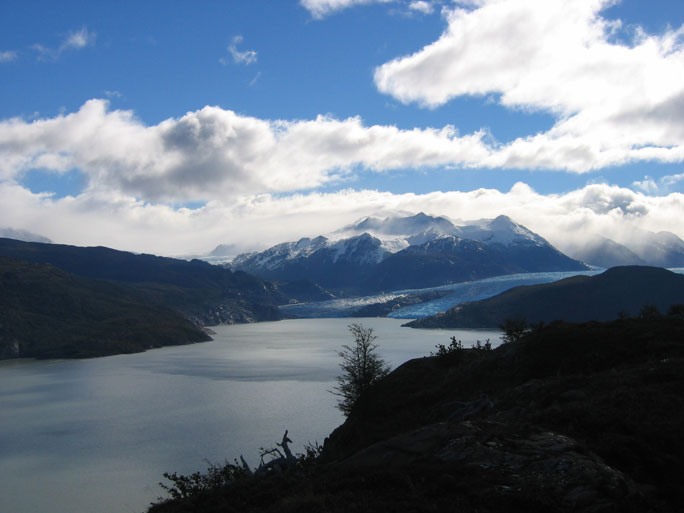
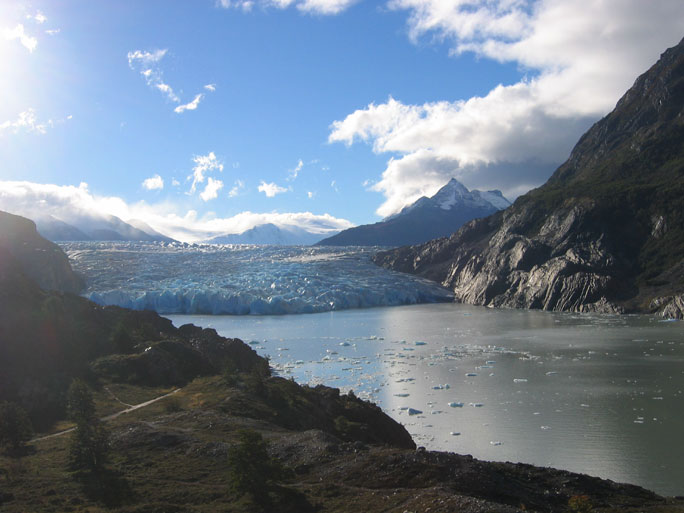
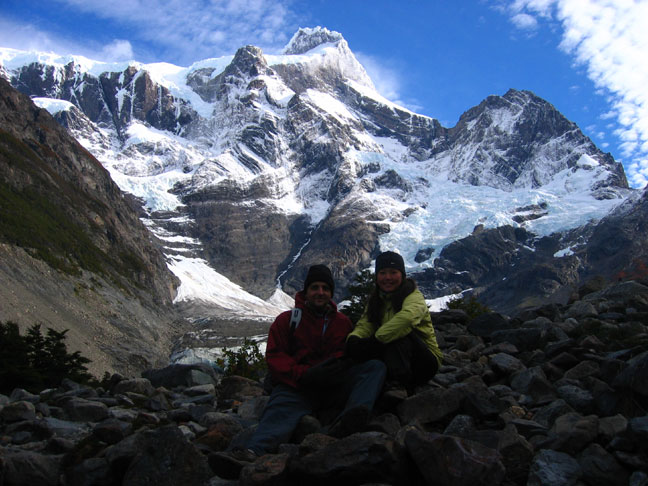
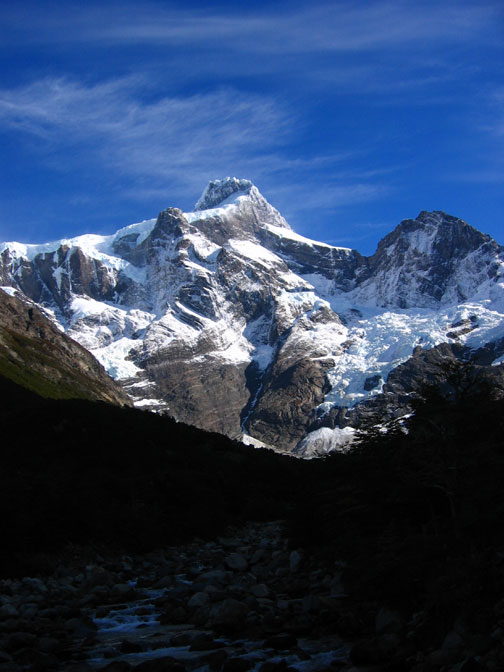
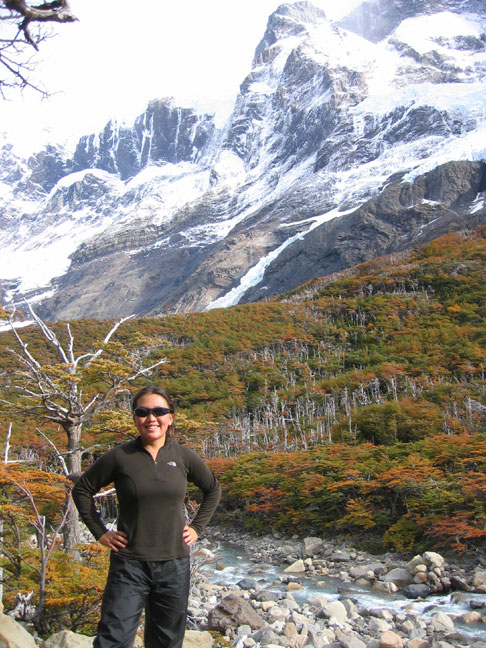
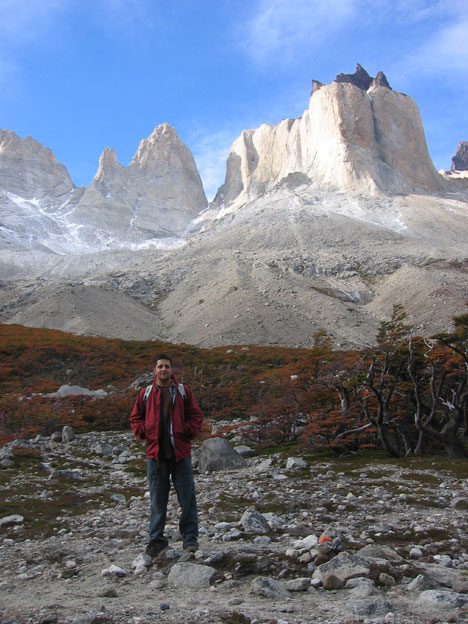
The next day we woke up to a beautiful sunny day and we immediately started out for the middle section of the W. The hike this day involved carrying our packs to the bottom of the next trail and leaving them behind. Then we walked up a steep valley surrounded by enormous 10,000 foot plus mountains. In elevation, we were slightly above sea level, so to look up at these 10,000 foot peaks was amazing. The mountain across the valley was covered in glaciers and snow fields. Every once in while we would hear a roaring thunder sound and look across the valley to see an avalanche. We walked up to the center of the valley and had a nice lookout over all of the peaks in here. We had lunch and quickly walked down back to our tents and backpacks. From here we walked to our next campsite.
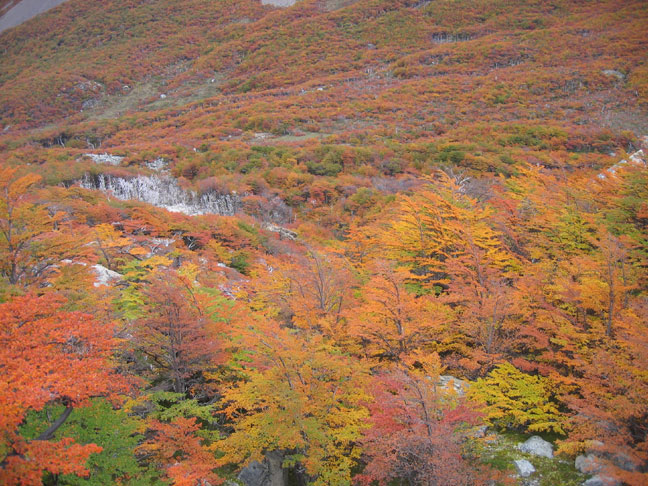
The park has a few refugios setup along this trail. A refugio is basically a huge cabin that you can pay to sleep inside or pay to eat the meals that they serve. They are fairly expensive compared to camping, as they cost about $25 US dollars to sleep in a dorm bed. But for those hikers who want to sleep in a warm room instead of the cold outdoors it is a great option. They serve breakfast, lunch and dinner, so you can also stop in a refugio along the way and have a hot meal. You can also pay to camp at the refugios, which is what we did. The fee also included access to their kitchen, dining room and hot showers. Needless to say, after two days of hiking about 24 miles, the refugio was much needed. We spent the entire night next to the wood burning stove sipping hot chocolate and eating. I should mention that each day we experienced all four seasons. At night it is pretty cold, probably in the mid 20’s. During the day it gets up into the 50’s, but when you are hiking uphill all day, 50’s feels a lot warmer than it is. So at night, since it was so cold, this refugio was especially great.
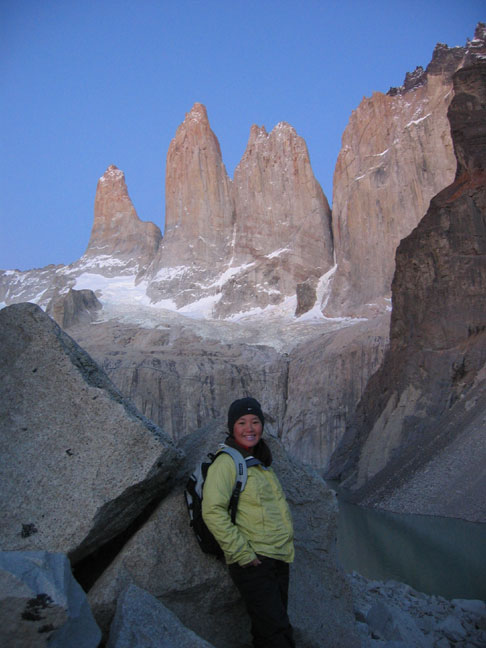
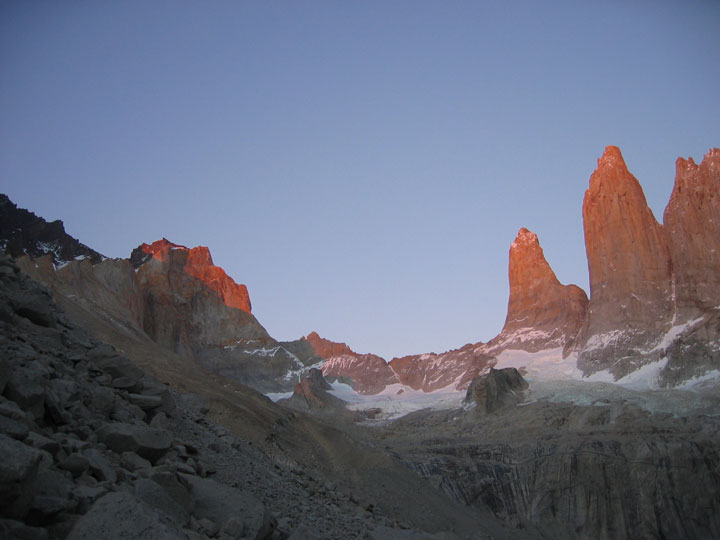
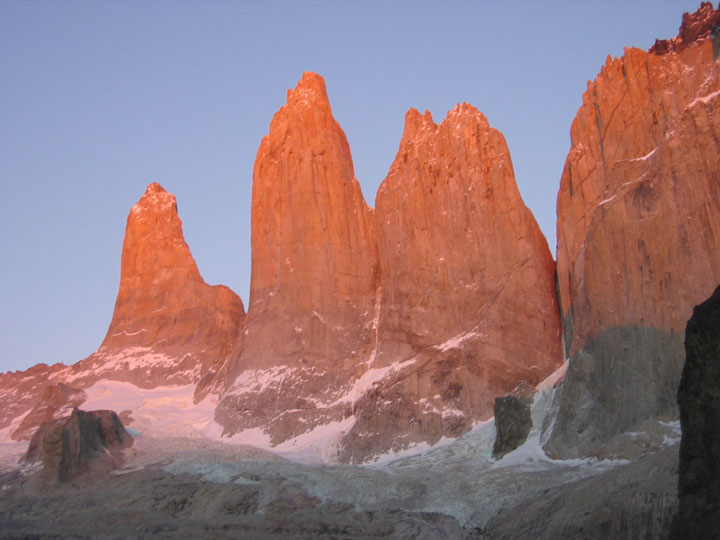
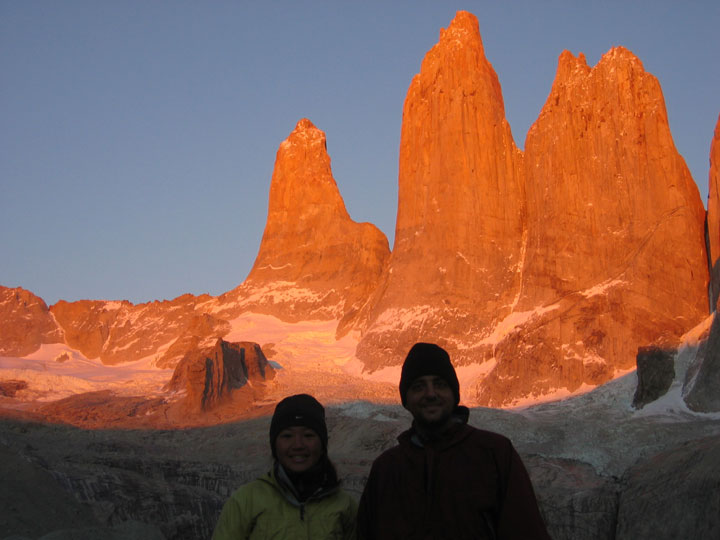
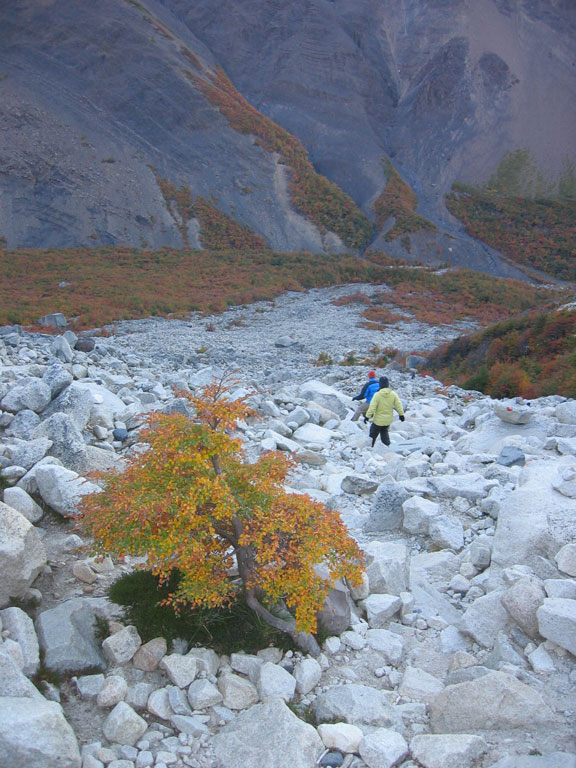
The next day we left for what we were thinking was going to be a relatively easy day of hiking: only 6 hours until the next campsite. What made the hike especially difficult was the wind. The wind was the strongest wind I have ever felt in my life. It must have been 50 or 60 mph. Some of the people in our group were literally getting thrown down from the wind. As we would be walking, we could hear that a huge gust was about to hit us, so we would have to stop walking, hunch down and get prepared to get blown over. Having the heavy backpacks on made it really easy to get blown over by the wind. We made our way through the powerful winds and scrambled up to the base of a glacier moraine. Our plan was to wake up the next morning at 6am and hike in the dark, up the glacier moraine to watch the sunrise against the Torres del Paine, or Towers of Paine. A glacier moraine is the area left behind after a glacier has melted away. What is left behind is a huge pile of giant boulders.
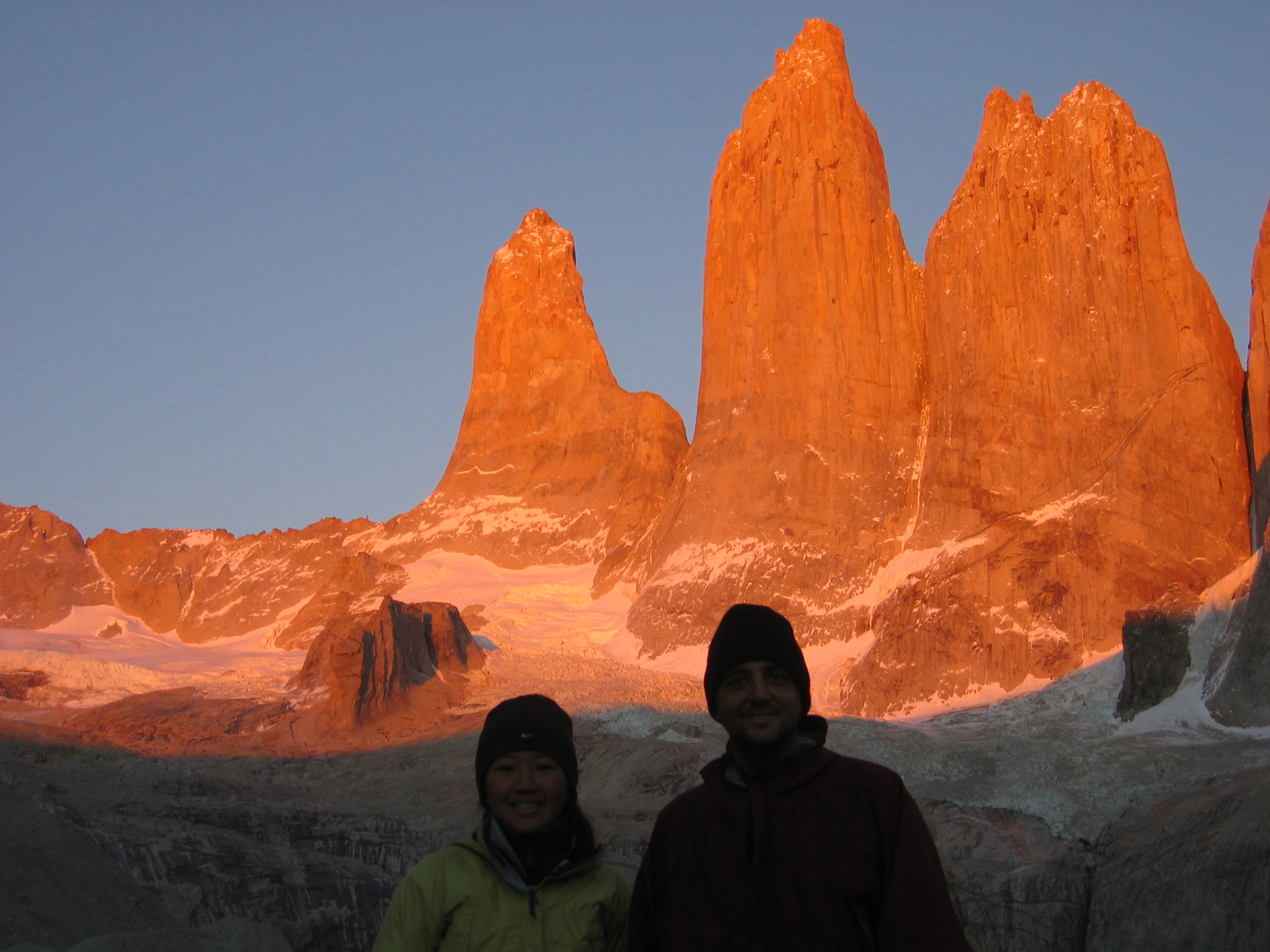
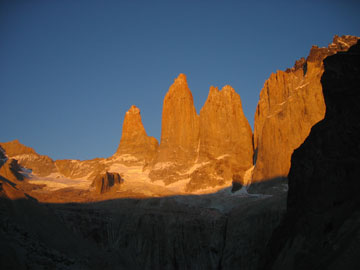
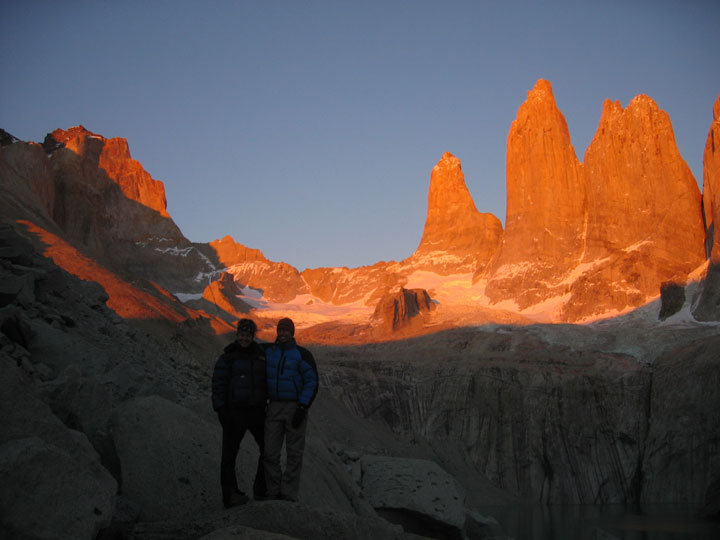
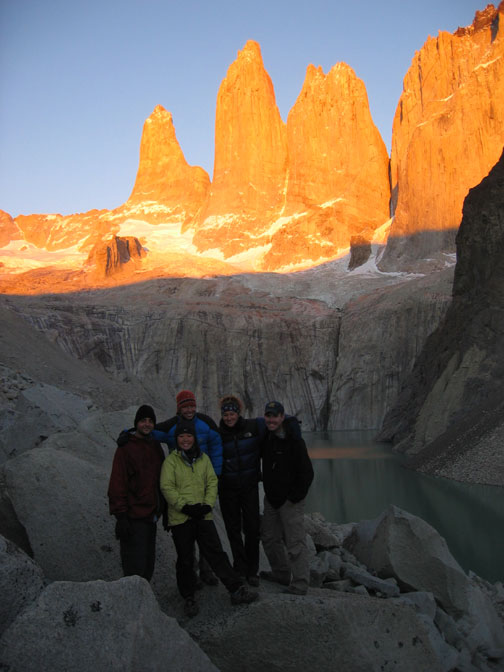
Our plan worked out perfectly. We scaled the glacier moraine in the freezing cold and arrived just before sunset. At first the towers were slowly lighting up against the dark blue sky. Slowly the sun started to rise and the cliffs brightened a bit. We were thinking that the towers were not going to light up to the bright red color that we had seen in pictures. But after waiting a few more minutes, we saw signs of the red light. A few minutes later, we took these pictures. Take a look. Here is another.
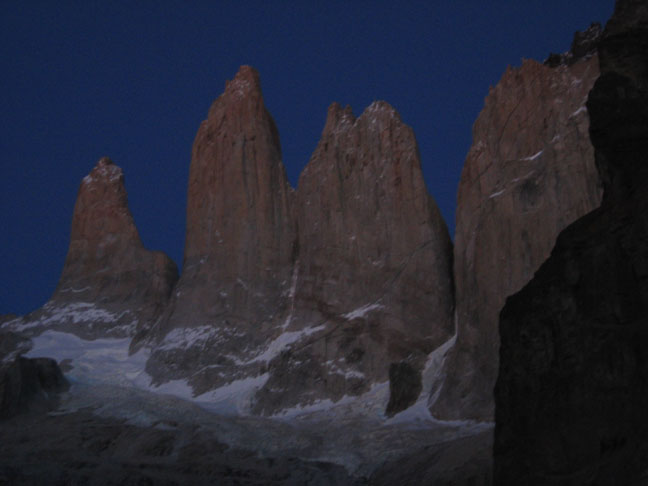
After watching the sunrise against the towers for about an hour, we headed back down to camp, packed up our tents and hiked for a few hours to the road where the bus picked us up and brought us back to the hotel. Four days and 42 miles later, we ran for the closest restaurant and had a feast of steak and wine.
Now we are back in Argentina, in El Calafate. We just went to Glacier National Park today, and tomorrow we head to a town on the other side of the park to hike along through the mountains. I will update the site with those pictures later.